

Is Tesla in trouble financially? What You Need to Know.
Did you know that nearly 80% of automotive analysts have recently adjusted their long-term growth forecasts for the electric vehicle sector? This massive shift in market sentiment has left many investors wondering if the industry leader is losing its grip. I often hear people asking, Is Tesla in trouble financially? as they watch delivery numbers fluctuate and competition intensify.
In this article, I examine the current state of the company to determine if it faces genuine distress. I will explore how recent delivery declines and global market shifts have sparked concern among experts. By analyzing the latest data, I aim to provide a clear picture of whether the firm is struggling or simply navigating a complex transition period.
Key Takeaways
- Recent delivery data shows a noticeable cooling in demand for electric vehicles.
- Market analysts are divided on whether current trends represent a temporary dip or a long-term structural issue.
- Increased competition from global manufacturers is putting pressure on profit margins.
- I analyze whether the company is facing a crisis or a strategic pivot.
- Understanding the broader economic context is essential for evaluating the firm’s health.
Overview of Tesla’s Financial Situation
Looking at the Tesla financial status, the 2024 delivery numbers are key. For the first time, Tesla saw a drop in vehicle deliveries from the year before.
This change makes people rethink what Tesla means to the car world. It’s important to dig deeper than just numbers to get the full picture.
Recent Performance Metrics
In 2024, Tesla delivered 1.78 million vehicles. Though big, this number shows a slowdown from the fast growth Tesla was known for.
Market changes and shifting tastes have affected these numbers. If you’re searching for the best Tesla used deals in the U.S., these trends are worth noting.
Key Financial Indicators
Keeping Tesla’s finances strong means balancing costs and profits. I keep an eye on the company’s operating margins. They show how well Tesla handles expenses when sales are down.
Investors also watch cash flow and spending on new projects. These signs tell us if Tesla can keep up with its big plans without hurting its finances.
Insights from Analysts
Experts have mixed views on Tesla’s future. Some see Tesla’s big setup as a sign of strength. Others fear more competition could hurt profits.
How well Tesla does depends on finding new ways to make money. I’ll keep an eye on how these changes affect Tesla’s place in the market.
Historical Context of Tesla’s Finances
To understand Tesla’s current situation, we must look back at its journey over the last decade. The company has faced many financial challenges. These experiences help explain why recent issues are so important to investors and analysts.
Evolution of Tesla’s Revenue
Tesla’s revenue has grown incredibly, from a small startup to a global leader. But, this growth hasn’t always been steady. The latest report shows a 13.5% drop in Q2 2024 deliveries compared to the year before.
This decline is striking, given the rapid growth in past years. Many are wondering why people are not buying Tesla anymore. This question looks at both past market saturation and current economic factors. Here’s a table showing key changes over time.
| Period | Revenue Trend | Market Status |
|---|---|---|
| 2018-2020 | Rapid Expansion | High Growth |
| 2021-2023 | Peak Profitability | Market Leader |
| 2024 | Correction Phase | Competitive Pressure |
Past Challenges and Recovery
Often, Tesla thrives when it faces tough times. During the “production hell” phase, many thought it would fail. But, the company managed to improve its supply chain and margins.
“The history of this company is defined by its ability to turn near-failure into a blueprint for future success. Resilience is baked into their operational DNA.”
These past recoveries show Tesla’s ability to overcome big challenges. Despite current Tesla financial difficulties, the company’s history suggests it can adapt well. Tesla is using its existing resources to try and stabilize its deliveries and regain its footing in a competitive market.
Impact of Recent Economic Trends
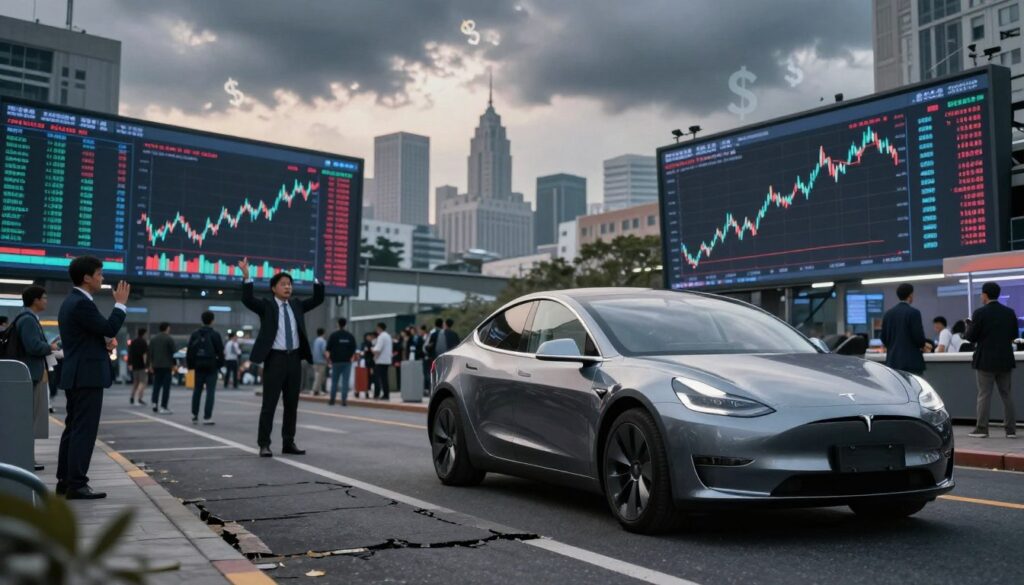
Broader economic pressures are making it tough for even the biggest names in EVs. These outside forces make it hard to keep growing steadily. They show the real Tesla financial challenges in a shaky market. Despite its past strength, Tesla is facing new challenges from economic changes.
Inflation and Its Effect
Inflation is a big worry that affects both making costs and what people want to buy. As the price of materials and work goes up, making money gets harder. Companies must find a balance between keeping prices low and covering rising costs.
“The current inflationary environment is not just a temporary hurdle; it is a fundamental shift that requires companies to rethink their entire cost structure to remain viable.”
Global Supply Chain Issues
Supply chain problems add to the trouble, making it hard to make things on time. These issues can cause delays, hurting investor trust and Tesla financial challenges. For example, in Europe, Tesla’s sales dropped by 27.9% in May compared to last year.
This drop is striking, given the electric car market in Europe is growing. It shows that certain issues are hitting Tesla hard, making it hard to keep up its usual pace. Here’s how these big economic factors affect cars.
| Economic Factor | Impact on Production | Consumer Sentiment |
|---|---|---|
| High Inflation | Increased Material Costs | Reduced Purchasing Power |
| Supply Chain Gaps | Manufacturing Delays | Lower Market Availability |
| Market Volatility | Strategic Uncertainty | Cautious Investment |
To tackle these Tesla financial challenges, Tesla needs a smart plan for supply chains and prices. I think how Tesla handles these global issues will decide its future. Keeping an eye on these signs is key for anyone interested in electric cars.
Investor Sentiment Towards Tesla
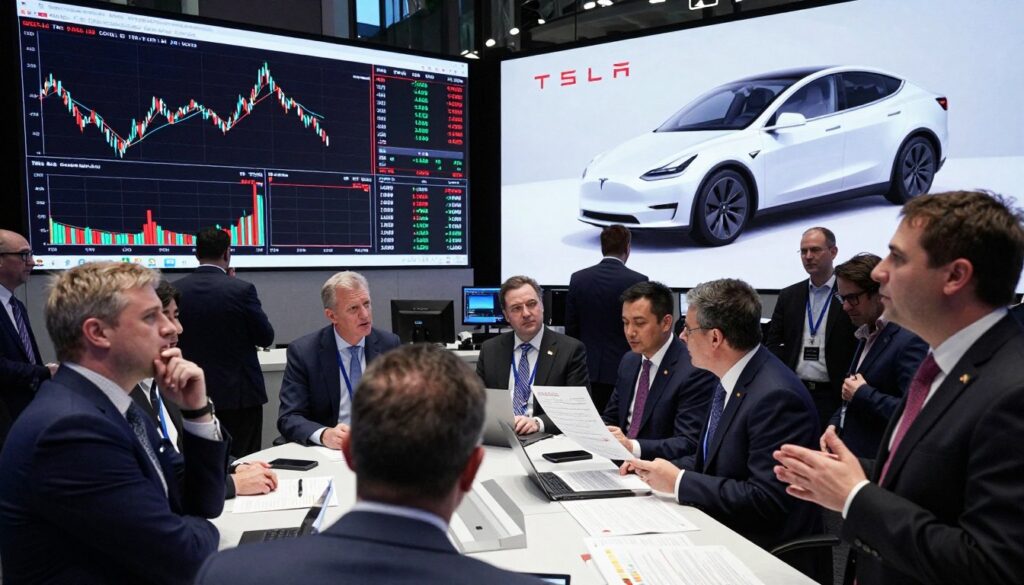
The Tesla financial situation has sparked a lot of debate. Shareholders and analysts are now more skeptical than before. They are closely watching every move Tesla makes.
Stock Performance Analysis
Tesla stock has dropped over 25%. This big fall has made many retail investors think twice about holding onto their shares. Brand fatigue is a big concern, as the excitement around Tesla’s products is fading.
Investors are also worried about the company’s leadership. They think Tesla is trying to do too much at once. This makes them question the company’s financial health.
Institutional Investor Activity
Institutional investors are being very careful with Tesla. They are adjusting their portfolios to avoid risks. This shows they think the easy days for Tesla’s stock are over.
The table below shows what’s affecting how investors see Tesla’s stability and future.
| Sentiment Factor | Impact Level | Investor Outlook |
|---|---|---|
| Stock Volatility | High | Cautious |
| Leadership Focus | Medium | Concerned |
| Market Competition | High | Watchful |
| Brand Strength | Medium | Stable |
The Tesla financial situation is key for those watching the electric vehicle market. Tesla is strong, but investors are more cautious now. How Tesla’s management handles these concerns will shape its future.
Production Challenges and Costs
The journey to keep Tesla financial stability is filled with complex manufacturing hurdles and rising costs. The car industry’s high costs of making many vehicles at once put a lot of pressure on profits. Handling these expenses is key to Tesla’s long-term success.
Issues in Manufacturing
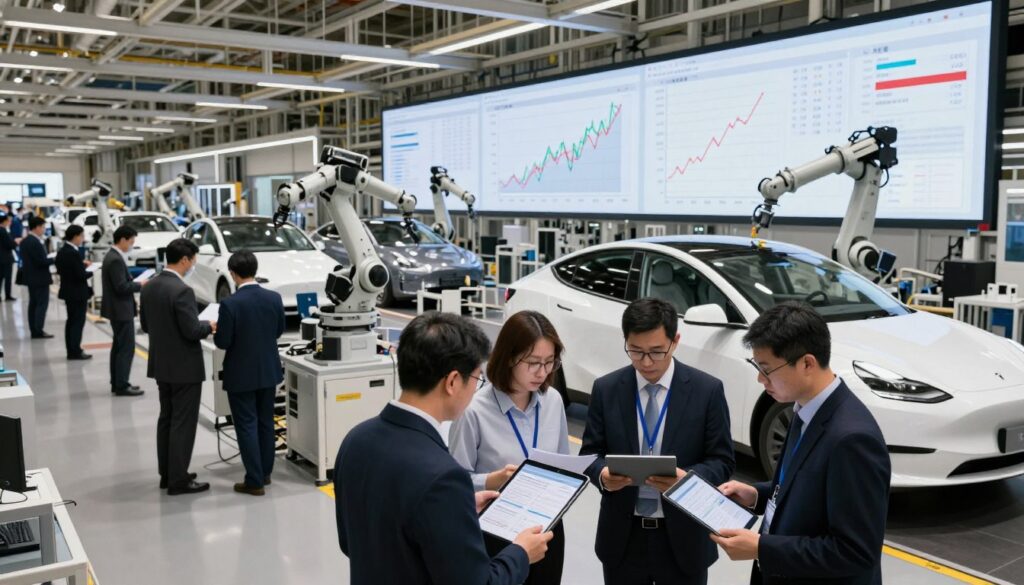
Building production lines big enough to meet global demand needs a lot of money and precision. Even small problems in making cars can cause big delays and higher costs. These issues test Tesla’s ability to grow efficiently.
When manufacturing hits a snag, the company’s profits take a hit right away. Keeping Tesla financial stability means the company must always find ways to make its factories more efficient. By making processes smoother, Tesla tries to cut down on waste in big car production.
Impact of Material Costs
Changes in raw material prices, like lithium and nickel, affect how much it costs to make cars. It’s interesting to see how Tesla deals with these price swings to keep its profits up. The company also looks for other ways to make money to help its finances.
One important way is by selling regulatory credits. In 2024, these credits made up 16% of Tesla’s total gross profit. These credits help keep the company stable when material costs go up or demand changes. By using these credits, Tesla can invest in new ideas while keeping current costs under control.
Competition in the Electric Vehicle Market
The electric vehicle market is now crowded, affecting Tesla financial performance. It has grown from a small niche to a bustling field. Today, over 70 electric models are available, making every company rethink their plans.
Rivals to Watch
Big names like Ford, Volkswagen, and Hyundai have entered the scene. They use their large production to make electric cars at different prices. Innovation is no longer exclusive to one brand, as big companies invest heavily in electric cars.
New players from China and startups are also making waves. They focus on segments that were ignored before. This competition makes companies work hard to keep their customers. They must offer value while keeping costs low.
“The transition to electric mobility is the most significant shift in automotive history, creating a battlefield where only the most agile will thrive.”
Market Share Trends
Recent data shows a decline in Tesla sales. This is part of a bigger trend of more choices for buyers. It makes it hard for Tesla to keep its high prices, affecting Tesla financial performance.
The table below shows the challenges Tesla faces:
| Market Factor | Impact on Tesla | Strategic Response |
|---|---|---|
| Model Variety | High Pressure | Product Diversification |
| Pricing Strategy | Margin Compression | Cost Optimization |
| Global Competition | Market Share Erosion | Regional Expansion |
The future of Tesla financial performance depends on how well it handles the competition. To stay ahead, Tesla needs to keep innovating and improving operations. The next few years will be a big test for all electric car makers.
Tesla’s Strategic Moves
My Tesla financial analysis shows a big change for the company. They’re moving away from just making cars. Now, they’re focusing on artificial intelligence and robotics.
This change is a smart move to keep growing. By using embodied AI, Tesla wants to make new money. This could change how we see the company’s value.

Expansion of Product Line
Tesla is not just making cars anymore. They’re adding advanced robotics to their lineup. This isn’t just about new gadgets. It’s about making a unified platform powered by AI.
They’re using their know-how in making cars to grow these new products. This is key to staying ahead in the tech world.
New Market Initiatives
One big part of their plan is making robotaxis. I think this is Tesla’s biggest chance to make money in the next ten years.
By moving to a software service for transport, Tesla hopes to make more money. Here’s how these new plans compare to old ones:
| Business Segment | Primary Revenue Driver | Growth Potentia | Risk Level |
|---|---|---|---|
| Traditional EVs | Vehicle Sales | Moderate | Low |
| Robotaxis | Autonomous Miles | High | High |
| AI & Robotics | Software Licensing | Very High | Very High |
This strategic pivot is key to understanding Tesla today. The risks are big, but the chance to lead in AI is huge for investors.
Innovation and Research Investments
Innovation is key to Tesla’s growth, even with doubts about its financial health. The company’s high-cost research is a gamble. It drains cash now but aims to lead the market for years to come.

Advances in Battery Technology
Tesla is working hard to improve its battery chemistry. It wants to make batteries cheaper and hold more energy. By making batteries in-house, Tesla hopes to cut costs and stay ahead.
These improvements are about more than just longer battery life. They’re about making batteries cheaper to produce. This is key for Tesla’s long-term success.
Autopilot Developments
Autonomous driving is Tesla’s biggest R&D focus. The company is testing robotaxis in Austin, Texas. Some think these tests are too expensive and wonder if Tesla is struggling financially.
These tests are a big bet on future profits. If Tesla succeeds, it could change its business model. But getting there will be hard and expensive.
| Innovation Area | Primary Goal | Financial Impact |
|---|---|---|
| Battery Tech | Cost Reduction | High Initial Outlay |
| Autopilot | Autonomous Fleet | Long-term Revenue |
| Manufacturing | Scalability | Improved Margins |
The success of these projects will shape Tesla’s future. Investors must weigh if the R&D spending shows strength or financial trouble. I’m watching how these tech advances affect Tesla’s cash flow.
Future Projections for Tesla
Looking ahead, investor confidence is key. The Tesla financial status is under close watch. Experts are waiting to see how Tesla balances innovation with making money.
The next years will show if Tesla can pull off its biggest plans. This will be a big test for the brand.
Analyst Predictions
Many are waiting for news on the robotaxi rollout. This move is seen as a game-changer for Tesla’s future value. A successful launch could boost investor trust in the Tesla financial status.
Analysts also watch Tesla’s spending on new tech. They want to see if the company can grow its self-driving tech without hurting its finances. Important things they’re looking at include:
- The timeline for full-scale autonomous fleet deployment.
- Regulatory approval progress in major U.S. markets.
- The ability to maintain healthy profit margins during the rollout phase.
Consumer Demand Trends
The talk is also about making cars more affordable. Tesla needs to offer cheaper models to reach more people. This is key for growth as the electric car market gets busier.
Even though people are interested, they’re watching prices more closely now. Tesla needs to find a balance between fancy tech and affordable cars. This will help the company stay strong and lead the market.
Potential Risks Ahead
It’s key to know the risks for those watching Tesla financial health. The company has shown strong resilience, but new threats are emerging. Investors need to understand these risks to predict Tesla’s future.
Regulatory Challenges
Government incentives are changing, and this is a big worry. The $7,500 federal EV tax credit will end on September 30, 2025. This could make Tesla’s cars seem more expensive to buyers.
Regulatory shifts can be hard for companies that rely on subsidies. If cars seem too pricey, Tesla might sell fewer. Keeping Tesla financial health strong will need quick thinking and planning.
Economic Downturns
Macroeconomic conditions are also a big risk for cars. High interest rates and possible recessions can lower spending on big-ticket items. For more on these risks to Tesla stock, check out expert views on market volatility.
When the economy slows, Tesla’s finances are more at risk. Watching these outside factors is as important as looking at what’s happening inside the company. Below is a table showing the main risks that could affect Tesla’s stability soon.
| Risk Factor | Potential Impact | Mitigation Strategy |
|---|---|---|
| Tax Credit Expiration | Reduced Demand | Price Adjustments |
| Economic Recession | Lower Sales Volume | Cost Optimization |
| Regulatory Changes | Compliance Costs | Strategic Lobbying |
| Market Saturation | Margin Compression | Product Innovation |
Conclusion: The Road Ahead for Tesla
The future of Tesla is a topic of much debate. Investors and experts are watching closely. They see a company at a crossroads, balancing past success with today’s market challenges.
Synthesizing Market Realities
People wonder, Is Tesla in trouble financially? My look into the matter shows Tesla faces tough competition and high production costs. Yet, its focus on research and battery tech offers a safety net.
Final Thoughts on Stability
Looking at Tesla now, we see a company trying to stay ahead. It’s exploring new areas to keep its lead in electric cars. Is Tesla in trouble financially? It depends on how well it handles these economic challenges.
I’d love to hear your thoughts on this. Do you see these issues as short-term problems or signs of bigger changes? Your opinions are important in discussing the future of green transport.
Potential Risks Ahead
Recent Performance Metrics
The 2024 delivery numbers are a big change for Tesla. The 13.5% year-over-year decline in Q2 is concerning. It shows that the company’s rapid growth might be slowing down.
Key Financial Indicators
The key to Tesla’s financial health is its reliance on regulatory credit sales. In 2024, these credits made up 16% of the company’s total gross profit. Without this, the company’s margins would be much thinner.
Insights from Analysts
Analysts are now focusing on “margin preservation” over “deliveries at all costs.” They believe Tesla needs to find new ways to boost demand. Price cuts from 2023 are not enough.
Evolution of Tesla’s Revenue
Tesla’s revenue has grown from the early days of the Roadster to the success of the Model 3 and Model Y. The company has used its early mover advantage to stay financially stable.
Past Challenges and Recovery
Tesla has faced financial difficulties before, like in 2018 with the Model 3. They recovered from those challenges. But now, the problems are about demand, not just making cars.
Inflation and Its Effect
Inflation affects Tesla in two ways. It raises the cost of lithium-ion batteries and makes expensive cars harder to sell.
Global Supply Chain Issues
Despite the EV market growing, Tesla saw a 27.9% drop in European registrations in May. This is due to supply chain constraints and subsidy removals in places like Germany.
Stock Performance Analysis
The Tesla stock value has dropped by 25%. This reflects investors waiting to see how the company evolves from a car maker to an AI firm.
Institutional Investor Activity
Institutional investors are worried about Elon Musk’s focus. They see brand fatigue affecting the company’s value.
Issues in Manufacturing
Automotive manufacturing has high fixed costs. When Tesla’s factory utilization drops, costs per vehicle increase. This puts a lot of pressure on the company’s finances.
Impact of Material Costs
I’m watching the prices of nickel and cobalt. Even with Tesla’s vertical integration, these costs are a big factor in the company’s financial performance.
Rivals to Watch
The competition has changed. Tesla is no longer alone. I’m tracking giants like Ford and Hyundai, and Chinese giant BYD, which is expanding globally.
Market Share Trends
With over 70 EV models available, Tesla’s market share is shrinking. It’s hard to keep a premium pricing strategy in such a crowded market.
Expansion of Product Line
I’m watching the Cybertruck closely. Its complex manufacturing makes its financial impact uncertain.
New Market Initiatives
Tesla is moving towards embodied AI and robotics. This is a bold move to create a “software-as-a-service” (SaaS) model that could surpass car sales.
Advances in Battery Technology
I’ve looked into Tesla’s 4680 battery cell production. Success in this area is key for cost reduction and improving Tesla’s financial health.
Autopilot Developments
The robotaxi testing in Austin, Texas is a major milestone. The success of Full Self-Driving (FSD) software will determine if Tesla stays a trillion-dollar company.
Analyst Predictions
Analyst opinions are more divided than ever. Some see a “dead money” period, while others predict a new growth phase with the robotaxi launch.
Consumer Demand Trends
I’m watching for a rumored “Model 2” or a more affordable Tesla. A sub-,000 vehicle is key for Tesla to regain mass-market momentum.
Regulatory Challenges
The ,500 federal EV tax credit expires on September 30, 2025. This could be a big challenge for Tesla’s finances.
Economic Downturns
If the U.S. economy goes into recession, luxury EVs will be the first to be cut from budgets. Tesla’s high-end lineup is vulnerable to economic shifts.

Hi! I’m Moheen Iftikhar, the founder of “CarZenithi.” I’m passionate about cars, modern automotive technology, and everything related to the driving experience. Through expert reviews, practical tips, and the latest industry insights, I aim to keep every car enthusiast informed, inspired, and connected to the world of automobiles.