

When was Hyundai Motor Company founded? Learn the History
Did you know a construction company became one of the world’s biggest car makers? It’s a story of growth from South Korea. Many fans look for a Hyundai pronunciation guide for American English to connect with the brand.
People often ask about Hyundai’s start. It officially began on December 29, 1967. This date is when a dream of modern design and engineering started. Looking back, we see how a local builder became a global leader.
Key Takeaways
- The organization officially began its operations on December 29, 1967.
- Its roots trace back to South Korea, starting as a construction-focused enterprise.
- The name itself translates to “Modern,” which highlights the brand’s core philosophy.
- Strategic growth allowed the firm to transition from building infrastructure to manufacturing vehicles.
- Understanding these origins provides essential context for the brand’s current international success.
A Brief Overview of Hyundai Motor Company
The size of Hyundai is huge in today’s car world. It has grown from a small maker to a big player. Now, it changes how people travel all over the world.
It’s amazing how Hyundai keeps quality high while handling big logistics. They also keep up with what customers want. This is key to their success.
Global Presence and Impact
Hyundai is everywhere, with a presence in 193 countries. They have many dealerships. This means people all over can get good cars.
The Ulsan facility in South Korea is a big deal. It’s the second largest car factory in the world. It’s the heart of their car making.
Key Industries and Innovations
Hyundai makes more than just regular cars. They also make luxury cars that are top-notch. This shows they’re confident and skilled.
They’re also big on electric cars and green making. They want to make cars better for the planet. Their focus on innovation keeps them leading in green energy.
The Founding Year: 1967
Knowing when was Hyundai Motor Company founded is key to understanding its global success. The year 1967 was a turning point for a brand that would change the car world. It was a time of big dreams for South Korea’s industry.

Vision of Mobility
Chung Ju-yung, the founder, had a big dream. He wanted to create a car industry in South Korea that could compete worldwide. He thought mobility was the backbone of economic progress for his country.
He wanted to make cars that would last and improve the lives of many. Looking at Hyundai and Jeep reviews shows how far they’ve come. Starting with local needs helped them grow and improve before going global.
Initial Investment and Resources
The founding date of 1967 was backed by smart planning and lots of money. Chung Ju-yung used his construction skills to get the resources needed. He knew success needed financial discipline and a commitment to innovation.
The company put a lot into building its future. They focused on research and development early on. This careful planning is what keeps the company strong today.
The Founders of Hyundai Motor Company
To understand Hyundai origins, we must look at its founder’s start. Chung Ju-yung was born in 1915 in what is now North Korea. He grew up in a poor farming family. This tough start taught him discipline and a drive to succeed.
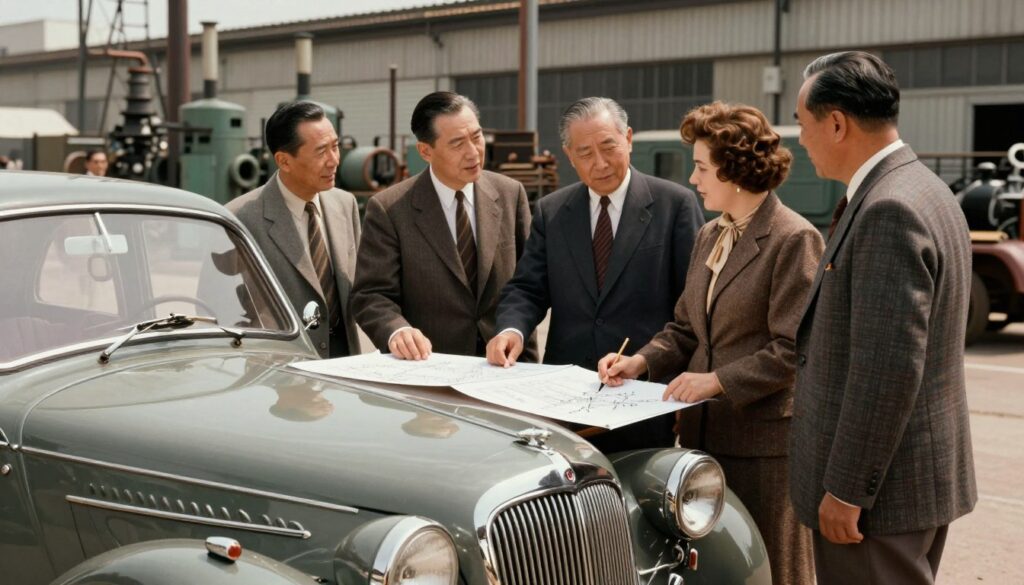
Chung Ju-yung’s Entrepreneurial Spirit
His journey from a rural area to a big industry leader shows his unwavering ambition. Before cars, he worked in construction and engineering. These jobs taught him about strong structures and planning, skills he used in Hyundai car designs.
He saw every challenge as a chance to innovate. He believed that with the right mindset, anything is possible. This entrepreneurial spirit shaped the company’s culture, helping it compete globally.
Key Contributors to Early Success
Creating a big company needed more than one leader. Chung Ju-yung had a team of engineers and managers who loved growth. Together, they turned a small business into a global leader in cars.
Several things helped them succeed early on:
- Resilience: They quickly adapted to market changes.
- Technical Expertise: They focused on hiring top engineering talent.
- Strategic Vision: They committed to quality and customer happiness for the long term.
The early team worked together well. This made Hyundai quick to adapt. Their hard work and teamwork set the stage for today’s tech in Hyundai cars. Their legacy inspires the company to tackle today’s mobility challenges.
The First Vehicle: Hyundai Cortina
The story of the Cortina is key to understanding Hyundai’s early days. This car was the start of Hyundai’s journey from a construction company to a car maker.

Collaboration with Ford of Britain
In 1968, Hyundai teamed up with Ford of Britain. This partnership helped Hyundai make the Cortina using Ford’s parts and designs.
Working with Ford gave Hyundai vital manufacturing experience. This experience was a big step forward, helping Hyundai learn to make cars on its own.
Reception in the Market
The Cortina’s arrival caught the public’s eye. It made Hyundai a trusted name in Korea, showing they could handle complex car production.
The Cortina’s success boosted Hyundai’s reputation for quality and reliability. This early win showed Hyundai’s big future as a global player.
Expansion Throughout the 1970s
In the 1970s, the company set out to change the South Korean automotive industry. This decade was a time of growth, pushing the company to become more than just an assembler. It was a defining period for the brand’s strong character.
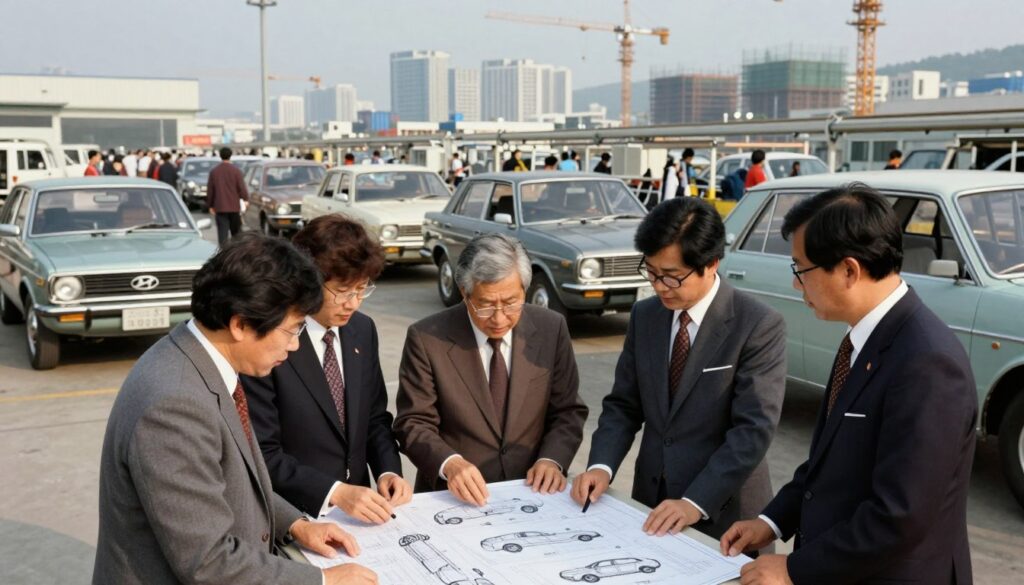
Introduction of New Models
The Pony was launched in 1975, marking a big milestone. It was the first car made for the South Korean automotive industry. Its design, by Giorgio Giugiaro, caught the hearts of many.
The Pony’s success showed the company could stand up against global rivals. Even though today’s drivers might prefer electric vehicles, the Pony was a groundbreaking start. It set a standard for being affordable yet reliable.
Navigating Oil Crisis Challenges
The 1970s were tough, with the oil crisis hitting hard. But the leadership team showed great strategic planning. They focused on being efficient and cost-effective.
This strategy helped the company keep moving forward while others faltered. By making cars that used less fuel, they proved to be forward-thinking. This prepared them for growth on a global scale.
The 1980s: Global Ambitions
In the 1980s, the company aimed for the American dream, changing its corporate history forever. This decade marked a bold move from a local player to a global contender. It was key in shaping the brand’s identity as strong and flexible.

Entry into the United States Market
The big moment came on February 20, 1986, when the company started selling cars in the U.S. The Hyundai Excel was the first model, known for being affordable. This appealed to many Americans looking for a good deal.
But, the fast growth brought challenges. The brand faced doubts about its quality. Despite strong sales, it had to prove it was reliable in the long run. This taught the company that success in the market means more than just low prices; it’s about quality.
Formation of Partnerships and Alliances
To grow globally, the company formed key partnerships. These alliances helped with complex rules and making cars. They also made the company’s production and supply chain better.
These partnerships helped improve the brand’s engineering and meet global standards. I believe these early partnerships were the foundation of the company’s success. Here’s a table showing the main factors of this growth period.
| Strategic Factor | Primary Focus | Outcome |
|---|---|---|
| Market Entry | Affordability | High initial volume |
| Quality Control | Reliability | Improved brand image |
| Partnerships | Technical Alliances | Operational efficiency |
Technological Advancements in the 1990s
In the 1990s, Hyundai made a big leap in car engineering. This decade was a turning point, moving from simple assembly to advanced technology. The 1990s were when Hyundai really found its place in the world market.
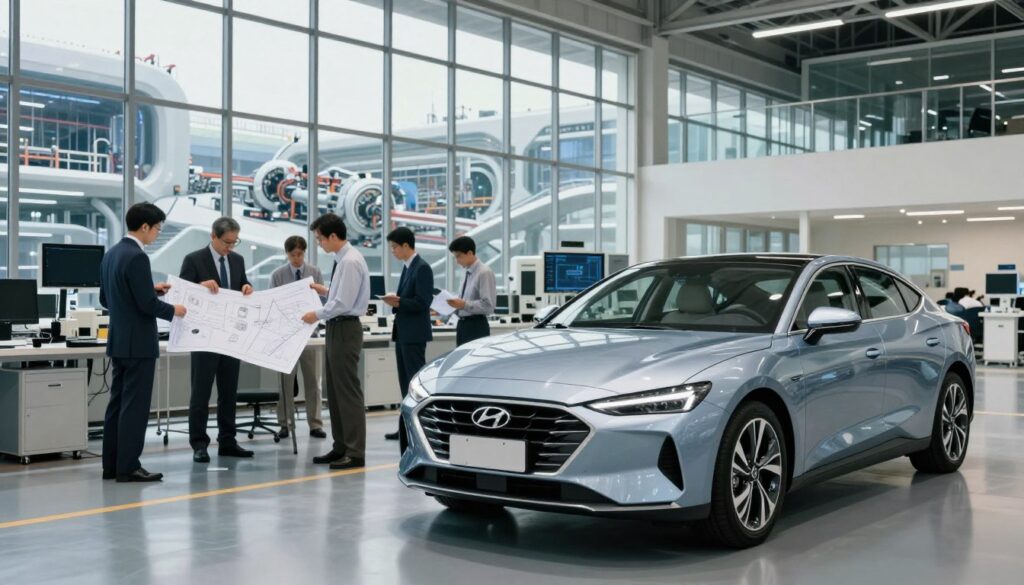
Launch of the Hyundai Sonata
The Sonata’s launch was a big deal for Hyundai. By 1988, they started making cars with their own tech. This car showed Hyundai could compete with big names by being reliable and affordable.
“Innovation is the only way to survive in a rapidly changing global market, and our commitment to proprietary technology remains our greatest asset.”
Commitment to Research and Development
The Alpha engine was a huge achievement for Hyundai in the 1990s. It showed they were moving away from using other companies’ tech. By investing in Research and Development, they improved their engineering and car quality.
This focus on innovation made Hyundai more independent. The table below shows how they changed from relying on others to being self-sufficient.
| Feature | Pre-1990s Approach | 1990s Innovation |
|---|---|---|
| Engine Design | Licensed Technology | Proprietary Alpha Engine |
| Market Focus | Budget Entry | Midsize Quality |
| Engineering | External Dependence | Internal R&D Centers |
| Brand Identity | Follower | Tech-Driven Leader |
This period laid the groundwork for Hyundai’s modern success. Their focus on engineering excellence in the 1990s is key to their legacy. The 1990s were a critical time for Hyundai’s growth.
The 2000s: Rebranding and Growth
The year 2000 was a big change for Hyundai Motor Company. Chung Mong-koo took over from his father, Chung Ju-yung, in 1999. This marked the start of a new era for the company.
Hyundai aimed to show it was more than just a small car maker. They worked hard to improve and grow.
Revamping the Corporate Image
The biggest change was Hyundai’s focus on uncompromising quality. They introduced a 10-year, 100,000-mile warranty. This showed they were serious about their cars.
Hyundai also set up design centers and research facilities. They wanted their cars to be as good as the best in the world. This was key to changing how people saw the brand.
- Quality-first manufacturing processes that reduced defects significantly.
- A renewed focus on modern, sleek design languages to appeal to international tastes.
- Aggressive marketing campaigns that highlighted the value and reliability of the new lineup.
Increased Global Production Facilities
Hyundai grew by opening new plants around the world. This helped them meet the demand for their cars. It was a big step for the company.
These new plants made it easier to get cars to customers. They helped Hyundai become a big player in markets like North America and Europe. This growth set the stage for future success.
Recent Innovations and Electric Vehicles
Hyundai is quickly becoming a leader in electric vehicles. It’s moving away from old engines to focus on the environment and performance. You can find out more about this history of innovation as it happens.
Pioneering Sustainable Mobility
The Ioniq brand is at the heart of Hyundai’s electric dreams. The E-GMP platform is a big step in car design and making. It means cars charge faster and go further, which people want.
Hyundai has also invested a lot in battery tech. In May 2023, it teamed up with LG Energy Solution to make EV batteries in the US. This move helps Hyundai stay ahead in the clean energy race.
- Enhanced Battery Efficiency: Making cells that last longer.
- Localized Production: Making cars closer to home to save money.
- Sustainable Ecosystems: Using green energy in car life cycles.
Future Vehicle Concepts
Hyundai is also thinking big about the future of travel. It’s working on hydrogen fuel cells for heavy-duty transport. This way, it offers a green option for long trips.
The company is also exploring air taxis to solve city traffic problems. These ideas are not just dreams. They’re part of a big plan to change how we travel. By investing in these ideas, Hyundai is ready for the future of transportation.
Current Leadership and Management
The Hyundai Motor Company has grown a lot. It started as a local maker and now it’s a global leader. This change is thanks to its strong team.
Today, Hyundai mixes its old values with new ideas. This helps it stay ahead in the car world.
Key Figures and Their Influence
Euisun Chung became the chairman on 14 October 2020. Euisun Chung has led Hyundai to focus more on electric cars and robots. He believes in being quick and creative to stay ahead.
“We must focus on the customer and provide value that goes beyond the vehicle itself, creating a sustainable future for all.”
Corporate Governance Structure
Hyundai’s leadership team works hard to be open and grow for the long term. They follow modern rules to keep their old values alive. This helps them make smart choices for everyone.
The team is great at blending old ways with new ones. They keep improving to serve people all over the world. This makes Hyundai a leader in cars.
Hyundai’s Contribution to the Automotive Industry
Hyundai has grown from a local maker to a global leader. It has changed how people see quality and reliability from Asian makers. This growth has helped the South Korean automotive industry a lot.
Pioneering Safety and Technology
Hyundai made a big change by focusing on safety. It introduced a 10-year or 100,000-mile powertrain warranty in the U.S. This move made others think about their warranties too.
The company also added advanced safety features to its cars. This made top-notch safety tech available to more people. It set a new standard for the industry.
Commitment to Environmental Responsibility
Hyundai is serious about making cars better for the planet. Through efforts like those of the group, it’s cutting down on carbon emissions. This shows the South Korean automotive industry is ready for the future of green cars.
The table below shows how Hyundai has changed the industry:
| Feature | Traditional Industry Standard | Hyundai Benchmark |
|---|---|---|
| Powertrain Warranty | 3-Year / 36,000 Miles | 10-Year / 100,000 Miles |
| Safety Tech | Optional Add-ons | Standard Integration |
| Sustainability | Internal Combustion Focus | Electric & Hydrogen Focus |
| Market Impact | Regional Growth | Global Innovation Leader |
The Future of Hyundai Motor Company
Hyundai is set to lead the world in a new era. It’s moving forward with cutting-edge tech and green energy. These changes will shape how we travel today and tomorrow.
Strategic Goals and Objectives
Hyundai is making big moves with new leadership. Jose Munoz will become global co-CEO in 2025. He’s ready to keep the brand competitive worldwide.
Learn about Hyundai’s history to see how it shapes today’s goals. The company is focusing on electric and hydrogen cars. These efforts keep Hyundai at the forefront of eco-friendly transport.
Predicted Market Trends and Challenges
Consumer tastes are changing fast, posing challenges for car makers. Hyundai is focusing on smart cars and self-driving tech. These steps are key to staying ahead.
From humble beginnings to global leader, Hyundai’s story is inspiring. It’s set to keep innovating and meet driver needs in the U.S. and worldwide. The future looks promising for this mobility pioneer.
FAQ
When was Hyundai Motor Company founded?
Hyundai Motor Company was founded on December 29, 1967. This marked the start of its journey to become a major player in the South Korean automotive industry and a global leader.
Who was the visionary behind the Hyundai origins?
Chung Ju-yung was the driving force behind Hyundai. His background in construction and engineering gave the company the entrepreneurial spirit and resilience needed to build a world-class brand.
What was the first car produced in the company’s corporate history?
The first car produced was the Hyundai Cortina, made in 1968. It was a partnership with Ford of Britain. This partnership gave Hyundai the manufacturing experience it needed for future success.
When did Hyundai enter the United States market?
Hyundai entered the U.S. market in 1986 with the Excel model. This move was a significant turning point that tested and eventually strengthened the brand’s global quality standards.
What are the company’s current goals regarding sustainable mobility?
Today, Hyundai is a pioneer in sustainable mobility and electrification. Through the Ioniq line and investments in hydrogen fuel cell technology, the company aims to lead the next generation of eco-friendly transportation.
Who is the current leader of Hyundai Motor Company?
The current leader is Executive Chair Euisun Chung. Under his guidance, Hyundai has shifted its focus to robotics, urban air mobility, and software-defined vehicles to stay competitive.

Hi! I’m Moheen Iftikhar, the founder of “CarZenithi.” I’m passionate about cars, modern automotive technology, and everything related to the driving experience. Through expert reviews, practical tips, and the latest industry insights, I aim to keep every car enthusiast informed, inspired, and connected to the world of automobiles.