


Is Benz a German Made Car? Everything You Need to Know
Did you know over 80% of luxury vehicles from this famous brand are made outside Germany? Many fans think of Stuttgart when they hear the brand. But, today’s cars are made all over the world.
People often get confused about where these cars come from. It’s important to know the difference between the brand’s history and where cars are made today. The company has strong ties to Europe. But, it also makes cars on many continents for different markets.
To understand this change, we need to look at the company’s leadership. You can find out more about the CEO of Mercedes-Benz at this link. I want to clear up these origins and show how the brand keeps its rich history while looking to the future.
Key Takeaways
- The company started in 1926 from a merger in Stuttgart.
- Today, it makes cars all over the world, not just in Germany.
- It’s now focusing on electric cars and digital tech.
- Its leaders come from all over, bringing new ideas.
- Even though it makes cars everywhere, it’s known for luxury and engineering.
1. Introduction to Benz
Exploring the Benz automotive origin takes us back to the start of motorized travel. Carl Benz’s vision set the stage for a new era in travel. His work with internal combustion engines was groundbreaking, marking the beginning of a new era in human mobility.
The History of Mercedes-Benz
In 1926, a major milestone was reached. The companies of Gottlieb Daimler and Carl Benz merged. This created the German automobile brand Mercedes we know today. The merger brought together decades of engineering expertise, solidifying Mercedes’ leadership in the industry.
For those curious about the impact of these roots on today’s engineering, check out the all BMW models guide for 2025. It shows how German luxury has grown. The merger allowed for unprecedented research and development.
Overview of the Brand’s Impact
The company’s motto is “The best or nothing.” This commitment to excellence has made Mercedes a symbol of luxury and reliability. It’s why Mercedes is seen as a quality leader by drivers around the world.
The table below highlights key milestones that cemented Mercedes’ status as a global engineering icon:
| Milestone | Year | Significance |
|---|---|---|
| Patent Motorwagen | 1886 | Birth of the automobile |
| Daimler-Benz Merger | 1926 | Formation of the modern entity |
| Silver Arrows Era | 1934 | Dominance in motorsport |
| Modern Luxury Era | 2025 | Focus on electric innovation |
2. Where is Mercedes-Benz Founded?
Exploring the Mercedes Benz country of origin reveals a deep history in Stuttgart. This city is where a German car manufacturer was born. It has shaped luxury and performance for over a century.
Gottlieb Daimler and Carl Benz were the visionaries behind the brand. Their work together created a global leader in the automotive world.
Origins in Germany
In the late 19th century, Daimler and Benz each made the first gasoline-powered cars. They merged in 1926, combining their skills under one name.
This merger made the brand a top German car manufacturer. Their innovation legacy is rooted in Germany, where it started.
Key Locations of Production
Stuttgart is Mercedes-Benz’s spiritual and corporate home. Even though the company has grown worldwide, its German roots guide its design and engineering.
It’s key to note the difference between the brand’s founding and today’s structure. Now, Mercedes-Benz is part of the Mercedes-Benz Group. Its headquarters is in the same area where it began.
| Milestone | Location | Significance |
|---|---|---|
| First Patent | Mannheim | Birth of the automobile |
| Daimler Works | Cannstatt | Early engine development |
| Corporate HQ | Stuttgart | Modern global operations |
3. The Evolution of Mercedes-Benz Vehicles
I’ve seen how Mercedes-Benz vehicles have changed a lot. They went from simple stagecoach conversions to the fancy cars we see today. This shows the German car manufacturer‘s vision.
The brand has always focused on safety and performance. This focus has helped it stay ahead in the car world for nearly a century.
Milestones in Automotive Innovation
Mercedes-Benz has brought many new ideas to the car world. They started with fast engines and then added safety features like crumple zones. This German automobile brand has always led in car safety.

These changes were more than just looks. They changed how we think about driving. Precision engineering is key in every Mercedes-Benz, making sure drivers have a great experience.
Changes in Production Techniques
Mercedes-Benz had to find new ways to make cars without losing quality. They moved from manual to automated lines. This made sure every car was the same high quality.
This change helped Mercedes-Benz keep its quality while reaching more people worldwide. You can find out more about their operations by looking at the subsidiaries of the Mercedes-Benz Group. They are key to their success.
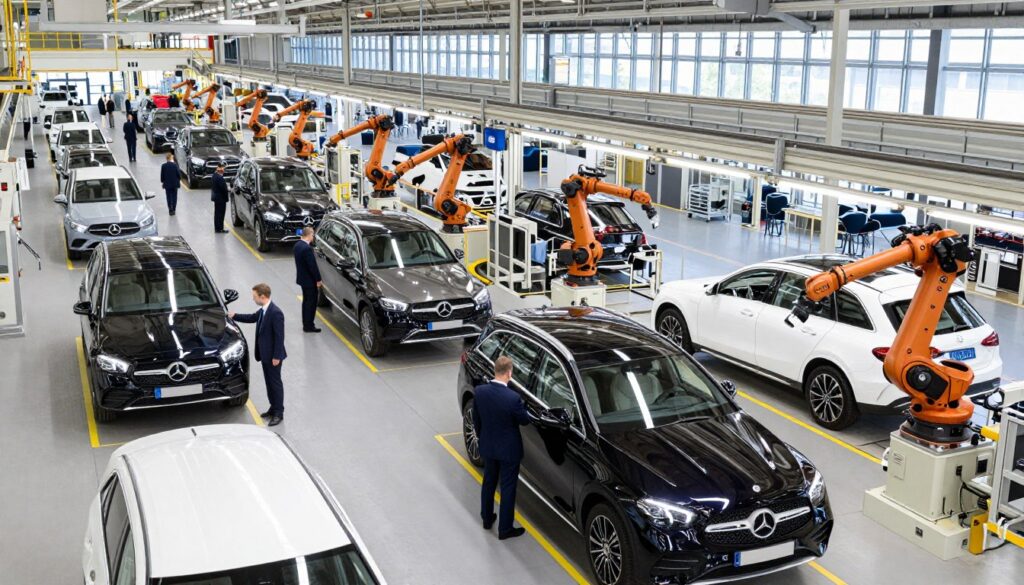
Now, Mercedes-Benz uses modern robots and green materials. These steps keep their production top-notch. They stay ahead in a world that values technology and quality.
4. Current Manufacturing Locations
Where is Mercedes Benz made today? It’s a mix of German skill and global reach. The Mercedes Benz country of origin is Germany, but it has many factories worldwide. This helps it serve customers all over the globe.
This global setup doesn’t change the brand’s core values. It keeps the quality high and makes the brand more accessible to its customers. If you’re looking at a new car or comparing it to a Tesla Model Y 2026, knowing where it’s made is important.
Key Factories in Germany
The brand’s heart is in Germany. Its historic plants are key for research, development, and making top models. These models show the brand’s luxury.
- Sindelfingen: The center for luxury sedans.
- Bremen: Makes a variety of C-Class and SUVs.
- Rastatt: Focuses on compact cars with advanced tech.
Global Manufacturing Footprint
The Mercedes Benz production country list has grown. It now includes major sites worldwide. This helps the brand compete in places like North America and Asia.
In the U.S., the Tuscaloosa plant in Alabama is key for SUVs. In China, joint ventures help serve the huge market. By mixing German roots with global sites, Mercedes ensures quality everywhere.
5. What Defines a German-Made Car?
The term “Made in Germany” is a symbol of top-notch car engineering. It combines old-world craftsmanship with the latest technology. For many, it means superior performance and longevity.

Criteria for Identifying German Engineering
True German engineering has certain signs that set it apart. It focuses on strong structure and smooth system integration. A Made in Germany Benz is known for these key features:
- Precision Manufacturing: Engines with tight tolerances for smooth running.
- Material Quality: High-grade steel and premium materials for durability.
- Durability Standards: Focus on long-term reliability over trends.
Importance of Quality Control
The “indestructible” reputation comes from a strong focus on quality. Every step in production is tested to high standards. This ensures Benz cars made in Germany are always top-notch.
This attention to detail makes the brand stand out in the US. Buyers know they’re getting a car that’s been carefully checked for safety. This commitment to excellence is key to the brand’s success worldwide.
6. The Role of German Engineering in Benz
Why are Benz cars made in Germany so admired? It’s because of Germany’s industrial heart. The brand’s fame isn’t just from marketing. It’s because of a deep commitment to mechanical excellence.
This philosophy shapes every step of making a car. It makes sure each vehicle is top-notch in reliability and performance.

Precision and Performance
The brand’s core is technical precision. The engineering team puts mechanical integrity first. This leads to a better driving experience for owners.
Every part is made to work well with the rest of the car. This focus on detail keeps the car running well for years.
The Influences of German Culture
German industrial culture shapes the brand’s identity. There’s a big push for safety and innovation. This shows a society that values lasting quality over quick profits.
This mindset pushes for constant tech improvement. Because of this, Benz cars made in Germany lead in luxury vehicles today. Their commitment to excellence keeps them at the top of the car world.
7. Mercedes-Benz and Globalization
I’ve seen how Mercedes-Benz blends its German roots with global needs. It stays true to its history but also meets the demands of customers worldwide. This balance is key to keeping premium quality standards.

Impact of International Markets
The company has wisely entered new markets to stay ahead. It has formed partnerships in Asia and set up plants in South America. This makes Mercedes-Benz available to more people around the world.
These global sites are more than just places to build cars. They are centers of innovation. By working with local teams, Mercedes-Benz learns what people in different places want. This helps the brand stay a global leader while meeting local needs.
Strategies for Production Abroad
Running a global supply chain is a big challenge. Mercedes-Benz makes sure every Mercedes Benz production country follows the same high standards. It’s amazing how a car made in one place feels the same as one made elsewhere.
The company uses advanced systems to keep production consistent. This ensures that Mercedes-Benz cars are always top-notch, no matter where they’re made. Below is a table showing how Mercedes-Benz spreads its manufacturing across the world.
| Region | Primary Focus | Strategic Goal |
|---|---|---|
| Europe | High-end Engineering | Innovation Leadership |
| Asia | Market Expansion | Volume Growth |
| Americas | SUV Production | Regional Demand |
8. Comparison with Other Brands
The executive car market is a place where prestige, performance, and reliability meet. It’s a battle of luxury and quality. To understand this brand’s place, we must see how it stands out from others.
For those curious about the competition, explaining differences between Audi, BMW, and Mercedes is key. Each brand focuses on different things. BMW is sporty, Audi is tech-savvy, and Mercedes is all about comfort and status.

How Benz Stacks Up against German Competitors
When we compare these giants, it’s clear that each has its own goals. Mercedes-Benz stands out for its refined ride quality. Here’s a table showing how they approach their cars:
| Brand | Primary Focus | Market Reputation |
|---|---|---|
| Mercedes-Benz | Luxury & Comfort | Prestige & Status |
| BMW | Driving Dynamics | Sporty Performance |
| Audi | Technology & AWD | Modern Innovation |
American Brands vs. German Engineering
European makers focus on build quality differently than American ones. American cars are about power and space. But German cars are known for their precision and reliability.
What makes them different includes:
- Material Selection: They use premium materials that last.
- Mechanical Complexity: They have advanced systems for safety.
- Ergonomic Design: Their cars are designed for comfort on long trips.
Choosing between these brands depends on what matters most to you. For those who value meticulous craftsmanship, German cars are the best in the luxury car market.
9. Customer Perception of German-Made Cars
In the American car market, German engineering is a big deal. Many see a car as more than just a ride. It’s a sign of personal and professional achievements.
Buying a high-end car is often a reward for hard work. People want unmatched quality and reliability. They see it as a way to celebrate their success.
The Prestige of German Engineering
German cars have a long history of excellence. This creates a strong emotional connection with buyers. Sitting in a German car makes people feel proud and important.
This high regard isn’t just about looks. It’s about the car’s ability to perform well in any situation. Key reasons for this include:
- Precision manufacturing for lasting quality.
- Leading cutting-edge safety technology for protection.
- Timeless design that shows sophistication and success.
Buyer Preferences in the U.S.
In the U.S. luxury car market, brand loyalty is key. Once someone tries a German car, they often stick with it. This loyalty comes from the car’s mix of comfort and performance.
“The true value of a luxury vehicle lies in the seamless integration of power, comfort, and the feeling of accomplishment it provides to the driver.”
In the U.S., people choose cars that fit their lifestyle and status. The three-pointed star is a symbol of success. German cars meet these high standards, keeping their top spot in American hearts and garages.
10. Sustainability Efforts at Mercedes-Benz
The brand now focuses on environmental responsibility, alongside performance and prestige. It integrates sustainability into every part of the vehicle’s life. This means luxury doesn’t harm our planet.
Green Manufacturing Initiatives
The company is working hard to cut its carbon footprint worldwide. It’s using green manufacturing to make factories more eco-friendly. This helps keep quality high while reducing harm to the environment.
For more on these changes, check out the ten facts about our progress. This shows how big companies are meeting today’s environmental needs. Being open about this builds trust with eco-aware buyers.
Future Goals for Eco-Friendly Production
The brand aims to switch to an electric-only lineup soon. This big change will affect how cars are designed and made. It’s a step toward a greener future for luxury cars.
These goals are backed by big investments in battery tech and green supply chains. The goal is to have a carbon-neutral fleet soon. This keeps the brand relevant and responsible in a fast-changing world.
11. Conclusion
This iconic brand is deeply rooted in German heritage. I looked into how Carl Benz‘s vision shapes today’s cars. His early work set a high standard for engineering that cars follow today.
The company keeps its historical roots while pushing into global markets. It’s clear they’re committed to innovation. This commitment makes their cars known for quality and prestige.
The brand’s future in the US is bright, with new technologies on the way. Models like the C-Class EQ will set new standards for performance and green tech. Now you know why this brand leads the global market.
Exploring German automotive engineering shows what makes these cars unique. I hope this insight makes you appreciate the skill behind every drive. The future for this legendary brand is as exciting as its past.
FAQ
Is Benz a German made car across all its models?
Yes, Benz’s core engineering and design are German. But, the brand uses a global network. Models like the S-Class are made in Germany. Others, like the GLE SUV, are made in the USA for local markets.
What is the official Mercedes Benz production country?
Germany is the main country for Mercedes Benz production. It’s where luxury sedans and core components are made. But, the company also has big manufacturing sites in the USA, China, South Africa, and Hungary.
Why is the Mercedes Benz country of origin so important to buyers?
The country of origin is key because it means “German Engineering.” This means durability, safety, and precision. Buyers see the German label as a sign of high status and value.
Where is Mercedes Benz manufactured for the American market?
For the American market, many SUVs are made at the Mercedes-Benz U.S. International plant in Vance, Alabama. But, luxury sedans and high-performance AMG models are imported from Germany.
Is Mercedes-Benz considered a true German automobile brand Mercedes enthusiasts respect?
Yes, Mercedes-Benz is seen as the true German automobile brand. Enthuisasts respect it for creating the first car and upholding German car standards for over a century.
Is every Mercedes-Benz engine a Made in Germany Benz product?
Many high-performance engines are hand-built in Germany at AMG in Affalterbach. But, the brand also makes engines in other places to meet global demand.

Hi! I’m Moheen Iftikhar, the founder of “CarZenithi.” I’m passionate about cars, modern automotive technology, and everything related to the driving experience. Through expert reviews, practical tips, and the latest industry insights, I aim to keep every car enthusiast informed, inspired, and connected to the world of automobiles.