



What are the sustainability initiatives of Mercedes-Benz Group?
Did you know the car industry is responsible for almost 20% of global carbon emissions? It’s amazing how big companies are now moving towards a greener future. Mercedes-Benz corporate social responsibility is leading this big change.
Environmental, social, and governance factors are key for lasting success. The company works on six main areas to make a big impact. Real progress means more than just talking; it’s about taking action.
By following global standards like the CSRD, the company keeps everything open for everyone. This shows how we see luxury and making things differently today. What are the sustainability initiatives of Mercedes-Benz Group? They show us how to make the car world cleaner and more honest.
Key Takeaways
- Sustainability is embedded into six core strategic business areas.
- The company prioritizes environmental, social, and governance (ESG) factors.
- Alignment with CSRD standards ensures high levels of transparency.
- Corporate responsibility acts as a pillar for long-term operational success.
- The brand focuses on measurable data to track its ecological progress.
Commitment to Carbon Neutrality
The “Ambition 2039” strategy is the heart of Mercedes-Benz’s environmental promise. It aims to make its new vehicle fleet CO2-neutral by 2039. This shows the company’s strong commitment to Mercedes-Benz sustainability efforts worldwide.
Vision for Sustainable Mobility
This vision means changing how cars are made and recycled. It looks at the whole life cycle, not just emissions. This is key to Mercedes-Benz corporate social responsibility.
Leaders at Mercedes-Benz say mobility must be both new and responsible. They believe this sets a standard for the car industry. It shows that cars can be fast and green at the same time.
Key Milestones and Timelines
The company uses specific goals in its scorecard to track progress. This helps leaders see how close they are to their 2039 goal. It lets them make changes as needed.
The plan has clear steps for each team. This is important for Mercedes-Benz corporate social responsibility. It makes big goals into something you can measure. This builds trust with those who care about Mercedes-Benz sustainability efforts.
Electric Vehicle Strategy
I see making vehicles electric as key to cutting down carbon emissions. By moving away from gas engines, Mercedes-Benz is changing the car game. These Mercedes-Benz sustainability efforts aim to make every car less harmful to the environment.

Emissions Goals for Electric Models
The company has set tough targets for its electric cars to help make the future cleaner. These goals focus on better batteries and greener production. Reducing emissions is about the whole life of the car, not just driving it.
Using green power in factories makes electric cars even more eco-friendly. This shows Mercedes-Benz’s dedication to cutting carbon emissions at every step. It’s a big part of their Mercedes-Benz sustainability efforts.
Current EV Offerings
The electric cars Mercedes-Benz offers now show how they’re making green driving mainstream. They have luxury sedans and practical SUVs, proving you can have both power and green tech. Many subsidiaries of Mercedes-Benz Group help make these special cars.
The variety of electric cars shows Mercedes-Benz’s skill in engineering. As they grow their electric lineup, they keep their high quality standards. These Mercedes-Benz sustainability efforts are leading the way to a greener, more efficient future in cars.
Sustainable Manufacturing Processes
The move to cleaner production is key in Mercedes sustainability programs. The future of luxury car making is about growing without harming the environment. Mercedes makes sure high-performance cars don’t harm our planet.
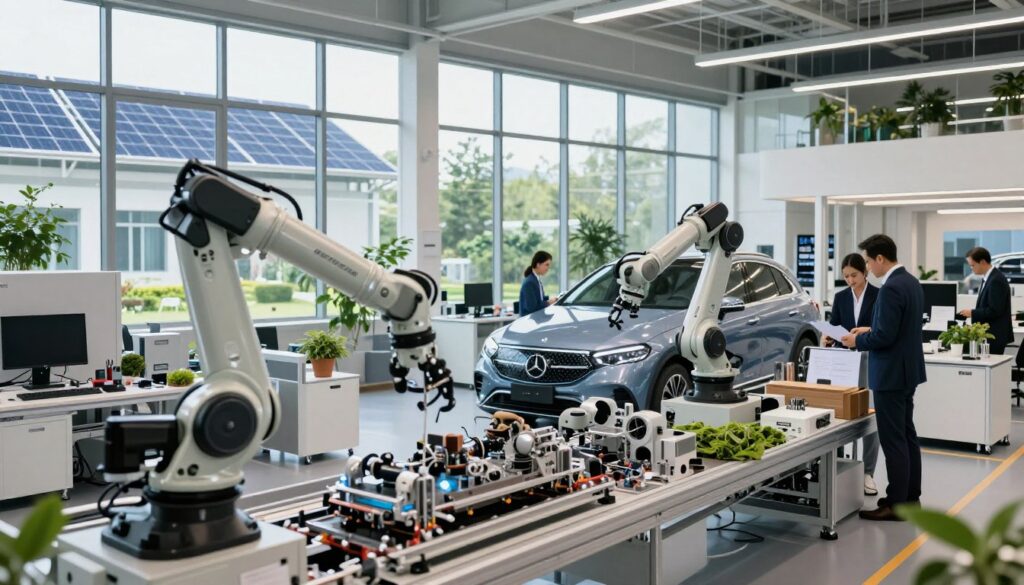
Use of Renewable Energy
Mercedes uses renewable energy in its global production. Many plants run on wind, solar, and hydroelectric power. This cuts down the carbon footprint of every car, including those in an all-BMW models guide for 2025 buyers in the United States.
By choosing carbon-neutral energy, Mercedes lowers emissions from assembly lines. This is key for meeting climate goals. Clean energy is a big part of Mercedes’ sustainability efforts.
Water and Resource Management
Mercedes also focuses on water and material use. The battery recycling plant in Kuppenheim is a big success. It recovers 96% of materials from old batteries.
This closed-loop system keeps valuable materials in use. The table below shows Mercedes’ resource management goals:
| Resource Category | Management Strategy | Efficiency Goal |
|---|---|---|
| Battery Materials | Advanced Hydrometallurgy | 96% Recovery Rate |
| Industrial Water | Closed-Loop Recycling | Reduced Consumption |
| Production Waste | Circular Economy Integration | Zero-Waste-to-Landfill |
These strict standards show how Mercedes sustainability programs keep improving. Mercedes focuses on saving water and materials. These efforts set a high standard for the car industry.
Circular Economy Practices
I want to highlight how the company redefines waste by treating every vehicle as a future resource. They move away from the “take-make-dispose” model. Instead, they embrace a circular economy that focuses on longevity and material recovery. These Mercedes sustainability programs are key to reducing the environmental impact of new models.
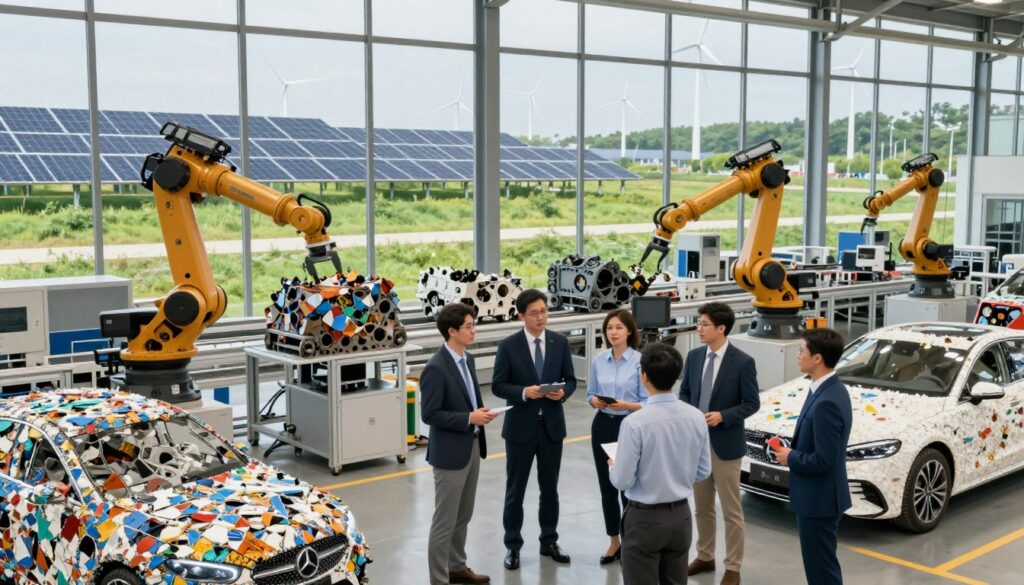
Recycling Programs for Vehicles
The company uses “Design for Circularity” principles to make components easy to dismantle and recycle. Engineers focus on mono-materials and new joining technologies for easier separation. This way, high-quality secondary materials can be reused in future production.
This design strategy increases the recycled content in new vehicles. It saves natural resources and lowers carbon footprint. It’s a key part of Mercedes sustainability programs for ecological balance.
Life Cycle Assessments
Life cycle assessments are key for developing repairable and maintainable components. They show a vehicle’s environmental impact from design to recycling. This helps the team find and fix high-impact areas early.
The table below shows the shift from old manufacturing to circular practices:
| Feature | Traditional Approach | Circular Approach |
|---|---|---|
| Material Usage | Primary raw materials | High secondary/recycled content |
| Component Design | Complex, permanent bonds | Designed for easy dismantling |
| End-of-Life | Waste or landfill | Resource recovery/recycling |
| Repairability | Replacement focused | Modular and repair-friendly |
These assessments ensure every decision supports a carbon-neutral future. Through Mercedes sustainability programs, luxury and environmental responsibility are combined.
Partnerships for Sustainability
I think the best eco-friendly initiatives Mercedes-Benz does are through strong partnerships. To reach a sustainable future, we need more than just new ideas. We need a worldwide network of shared knowledge and open talks.
Working with different groups helps us face big environmental issues in our field. Collective action is key to making lasting changes.
Collaborations with Environmental Organizations
Our main plan is the Mercedes-Benz Sustainability Dialogue every year. It’s a key place for talking openly with NGOs, schools, and business leaders.
These talks give us important feedback to improve our eco-friendly initiatives Mercedes-Benz worldwide. Working with outside experts keeps our goals big, clear, and based on science.
Industry Partnerships
But it’s not just about working with green groups. We also team up with other companies to grow green tech. We work with leaders to set new rules for cars.
These partnerships help us share ideas and tools, speeding up green solutions. By working together, we make every eco-friendly initiatives Mercedes-Benz project more powerful for our planet.
Sustainable Supply Chain Management
I see the supply chain as key to eco-friendly initiatives Mercedes-Benz takes. Our duty goes beyond our factory. We work with global partners to ensure every part is made with care for people and the planet.
Ethical Sourcing of Materials
I focus on a risk-based approach to tackle human rights issues in our chain. This lets us target efforts where they’re most needed, like in risky areas. Protecting human rights is a must for every supplier we work with.
The Corridor Initiative shows our dedication to improving supply network conditions. It’s about being open and making sure our sourcing is always right.
Supplier Sustainability Standards
We set high standards for our partners to protect the environment. This includes cutting carbon emissions and using resources wisely. Compliance is a must for us, as shared values are key to success.
My team and I check how suppliers do to make sure they meet our goals. These eco-friendly initiatives Mercedes-Benz supports aim to make the auto industry better. Together, we’re working towards a greener future for all in our production.
Innovation in Green Technologies
I believe that the path to true Mercedes-Benz environmental sustainability lies in evolving our material science and engineering. By pushing the boundaries of what is technically possible, I am helping to create the tools needed to decarbonize the automobile of the future. This commitment to progress ensures that every new vehicle reflects our dedication to the planet.

Research and Development Initiatives
My focus is currently centered on the Tomorrow XX technology program, which serves as a hub for radical experimentation. This initiative is actively researching more than 40 new component and material concepts to reduce our ecological footprint. I am excited about our work with bio-based materials and advanced mono-material designs that simplify the recycling process.
These efforts are not merely theoretical; they are designed to be integrated into our global manufacturing ecosystem. By testing these concepts early, I ensure that we maintain the highest levels of performance and safety. This rigorous approach is essential for achieving long-term Mercedes-Benz environmental sustainability goals.
Future Technologies
The transition from laboratory testing to series production remains a top priority for my team. I oversee the evaluation of these future technologies to ensure they meet our strict quality standards before they reach the road. Innovation is the engine that drives our transition toward a fully electric and circular future.
The following table highlights the shift in focus from traditional methods to our new sustainable development framework:
| Development Focus | Traditional Approach | Sustainable Innovation |
|---|---|---|
| Material Sourcing | Standard Plastics | Bio-based & Recycled |
| Design Philosophy | Complex Assemblies | Mono-material Focus |
| Production Goal | Cost Efficiency | Carbon Neutrality |
| Testing Phase | Performance Only | Lifecycle & Durability |
By investing in these advanced technologies, I am confident that we are building a foundation for lasting change. My goal is to ensure that every innovation contributes to a cleaner, more efficient automotive landscape. This dedication to Mercedes-Benz environmental sustainability will continue to guide my research and development strategies for years to come.
Carbon Offsetting Initiatives
I believe we need a final step to reach net carbon neutrality. We focus on cutting emissions, but some are unavoidable. That’s why we use certified carbon offsetting in our Mercedes-Benz environmental sustainability plan.
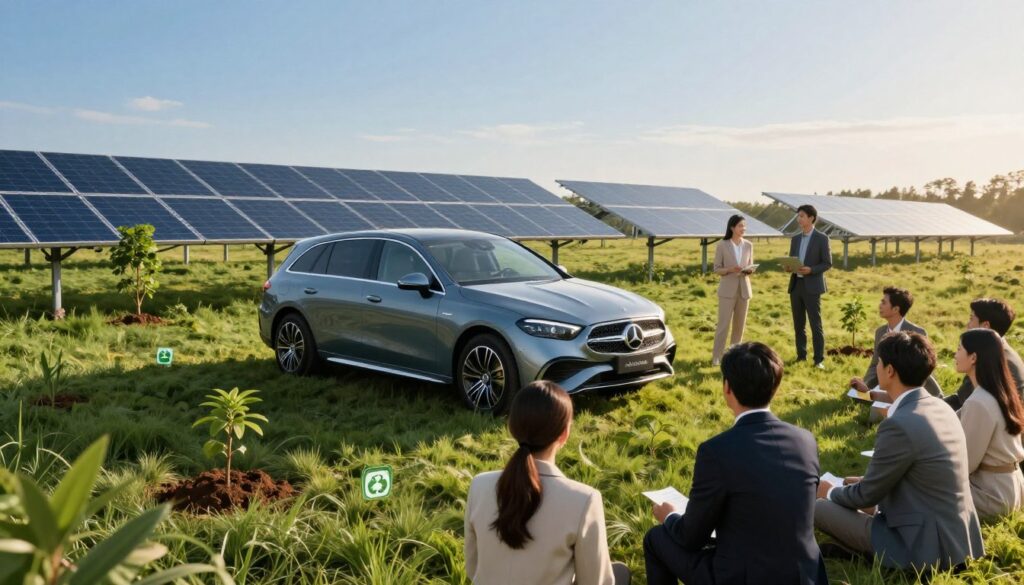
Tree Planting Projects
We pick projects that offer real environmental benefits. Our tree planting is more than just carbon capture. We aim for biodiversity and ecosystem health. Every ton of carbon we offset helps restore our planet.
“True sustainability is not just about doing less harm, but about actively contributing to the restoration of our natural world.”
Community Engagement and Impact
Supporting local communities is part of our Mercedes-Benz environmental sustainability promise. We believe offsetting should also help people. These projects create jobs, improve water, and support farming.
We’re all about being open and honest. Our offsetting claims are credible and impactful. By choosing projects with proven results, we show our commitment to the environment.
Enhancing Fuel Efficiency
To achieve sustainability, we need to improve current tech and introduce new ideas. Refining our vehicles is key to reaching zero-emission goals. These Mercedes-Benz green initiatives aim to boost performance and cut fuel use for all drivers.
Development of Efficient Combustion Engines
Improving combustion engines is a step toward a cleaner future. Our engineers work on thermal management and friction reduction. This lowers CO2 emissions across our fleet. Precision engineering makes our traditional engines eco-friendly.
These updates offer sustainable choices for those not ready for electric cars. Every engine improvement helps us cut our carbon footprint. Our ongoing Mercedes-Benz green initiatives focus on this goal.
Hybrid Vehicle Technology
Hybrid tech is a key part of our transition plan. It combines electric motors with efficient engines for less fuel use in cities. DRIVE PILOT also makes driving safer and more efficient by optimizing speed and braking.
These smart systems help drivers manage energy better during their daily drives. I’m proud of how they work together for a smooth user experience. Here’s a table showing the benefits of our efficiency-focused tech:
| Technology Type | Primary Benefit | Impact Level |
|---|---|---|
| Advanced Combustion | Reduced Fuel Burn | High |
| Hybrid Powertrains | Lower Emissions | Very High |
| DRIVE PILOT | Optimized Traffic Flow | Medium |
By investing in these solutions, we keep our Mercedes-Benz green initiatives effective and available. I’m committed to exploring new limits in automotive efficiency. This prepares our customers for a future where electric travel is common.
Employee Involvement in Sustainability
I am proud to share how we are investing in our people to drive meaningful change across the organization. The success of our Mercedes-Benz green initiatives relies on our team’s passion and expertise.
Training and Awareness Programs
We are committed to keeping our team ahead of the industry. Between 2022 and 2030, we plan to invest over €2 billion in employee training programs. This will help our staff adapt to new job profiles and emerging technologies.
These programs give the skills needed for a sustainable business model. By focusing on continuous learning, we empower everyone to help reach our environmental goals. This investment prepares our workforce for the future of mobility.
Internal Sustainability Committees
We also foster a culture of responsibility through internal sustainability committees. These groups connect management with the shop floor, ensuring Mercedes-Benz green initiatives are part of daily work. They let employees share ideas and lead local environmental projects.
These committees keep the momentum going across all departments. By encouraging grassroots involvement, we make sustainability a shared value. Through teamwork, we strengthen our commitment to a cleaner, more efficient future for our Mercedes-Benz green initiatives.
Social Responsibility Programs
Creating a better future is not just about making new cars. It’s about investing in people and the planet. Sustainable practices Mercedes-Benz go beyond just making cars. They focus on digital trust and using AI responsibly.
Community Development Initiatives
The brand wants to make a positive difference in the places it operates. It works on community projects that help now and in the future. Empowering local populations is key to this approach.
These efforts improve life and bring people together. It shows the brand’s commitment to sustainable practices Mercedes-Benz is about people. It involves local people to make sure the impact lasts.
Investment in Education and Training
Preparing the next generation is a big deal for the company. It invests in education and training. This helps young people get the skills they need for the future.
These programs teach tech skills, digital literacy, and leadership. This way, the company supports its sustainable practices Mercedes-Benz with a knowledgeable community. Here’s a look at what these investments focus on.
| Focus Area | Primary Objective | Target Audience |
|---|---|---|
| Digital Literacy | Enhancing tech skills | Students and youth |
| Vocational Training | Developing trade expertise | Apprentices |
| Community Outreach | Improving local welfare | Local residents |
| AI Ethics | Promoting responsible tech | General public |
Future Goals and Challenges
Reaching net carbon neutrality is a journey, not a final goal. It needs constant changes due to new global trends and tech. Mercedes-Benz shows its dedication to the environment by using sustainable practices in its daily work.
Strategic Vision for Tomorrow
The company aims to grow its supply chains while keeping high ethical standards. I think being open about where materials come from will be key in the next 10 years. Knowing Mercedes-Benz’s sustainability efforts helps us see how it balances growth with protecting the planet.
Upcoming Milestones
Mercedes-Benz is moving towards an electric future with new tech. I expect big steps in battery recycling and using green energy. These steps will keep the brand leading in the shift to cleaner cars.
FAQ
What are the sustainability initiatives of Mercedes-Benz Group?
Mercedes-Benz Group is leading the way in sustainability. They aim for carbon neutrality by 2039. They also focus on electric vehicles and circular economy practices.
They ensure ethical supply chains and use renewable energy. This makes their production sites green.
How would you describe the current Mercedes-Benz sustainability efforts regarding manufacturing?
Mercedes-Benz is committed to “Green Production.” They use 100% renewable electricity at their plants. They also have advanced resource management.
The Kuppenheim battery recycling plant is a key example. It aims for over 96% recycling rate.
What are the primary Mercedes sustainability programs for the circular economy?
Mercedes-Benz focuses on “Design for Circularity.” They use mono-materials for easier recycling. They also increase secondary raw materials in new cars.
They have “Return and Recycle” programs for high-voltage batteries. This is a big step toward a circular economy.
What specific eco-friendly initiatives Mercedes-Benz has introduced for its fleet?
Mercedes-Benz has introduced the EQ brand for electric vehicles. These cars use sustainable materials like Dinamica microfiber and leather alternatives.
This is a big step toward eco-friendly luxury.
How does Mercedes-Benz environmental sustainability address the supply chain?
Mercedes-Benz has strict standards for suppliers. They audit suppliers for environmental compliance and human rights. This ensures ethical sourcing of materials like cobalt and lithium.
Can you explain how Mercedes-Benz green initiatives involve renewable energy?
Mercedes-Benz focuses on green power generation and consumption. They invest in solar and wind farms to power their operations.
They also encourage suppliers to use 100% green electricity. This is a condition for future contracts.
What are the core sustainable practices Mercedes-Benz employs in vehicle design?
Mercedes-Benz uses Life Cycle Assessments (LCAs) in design. This helps them make better decisions on materials and design.
By analyzing environmental impact, they aim for sustainable vehicles.
How is Mercedes-Benz corporate social responsibility reflected in their social programs?
Mercedes-Benz’s CSR is shown in community involvement and disaster relief. They also support education and focus on Digital Trust.
They ensure data and privacy in AI-driven vehicles. This is a key part of their CSR.

Hi! I’m Moheen Iftikhar, the founder of “CarZenithi.” I’m passionate about cars, modern automotive technology, and everything related to the driving experience. Through expert reviews, practical tips, and the latest industry insights, I aim to keep every car enthusiast informed, inspired, and connected to the world of automobiles.


