

Toyota Maintenance: Schedule and Tips for Lasting Performance
Did you know cars that get regular care can last up to 200,000 miles longer? Keeping my car in top shape is not just about avoiding repairs. It’s about protecting my investment and making sure my daily drive is smooth.
Regular care keeps my car’s value high and gives me peace of mind on the road. By focusing on Toyota maintenance, I make sure every part works right. This is what the maker intended.
Finding a trusted Toyota maintenance near me is key to a lasting bond with skilled techs. They know my car’s special needs and catch problems early. This saves me money and keeps my car running well for any trip.
Key Takeaways
- Regular care significantly extends the lifespan of your vehicle.
- Proactive service protects your long-term financial investment.
- Expert technicians provide specialized knowledge for your specific model.
- Consistent check-ups ensure maximum safety and fuel efficiency.
- Building a relationship with a local shop simplifies your service schedule.
Understanding Toyota Maintenance Basics
When I take care of my Toyota maintenance, I’m making my car last longer. Every new Toyota comes with ToyotaCare. This plan includes scheduled maintenance and roadside help for a certain time. It’s a good start, but I know I need to do more to keep my car running well.
Importance of Regular Maintenance
Regular service is key to my car’s health. It stops small problems from becoming big, costly ones. To save money, I look for affordable Toyota parts to keep my car in top shape.
“The bitterness of poor quality remains long after the sweetness of low price is forgotten.”
Common Myths About Toyota Maintenance
Many think they need to change their oil every 3,000 miles. But, newer cars can go much longer between oil changes. I check my Toyota maintenance manual to see what’s best for my car.
Some think DIY Toyota maintenance is too hard. But, many simple checks can be done at home. Doing this myself saves me time and money.
Benefits of Following a Maintenance Schedule
Sticking to a maintenance plan has many benefits. Here are the main advantages:
| Benefit | Impact on Vehicle | Long-term Result |
|---|---|---|
| Improved Safety | Reliable braking and handling | Reduced accident risk |
| Higher Resale Value | Documented service history | Better trade-in offers |
| Fuel Efficiency | Optimized engine performance | Lower monthly fuel costs |
| Warranty Protection | Compliance with manufacturer terms | Avoided repair expenses |
Having my Toyota maintenance manual helps me stay on track. Whether I do it myself or go to a certified center, the goal is the same. I want my Toyota to stay in top shape for years.
Recommended Maintenance Schedule for Toyota Owners
Keeping my Toyota in top shape starts with knowing its needs. By sticking to the Toyota service schedule, I prevent early wear and keep everything running right. Regular care is key to protecting my investment and keeping my car performing well.
Following these guidelines helps me dodge expensive repairs caused by neglect. By keeping up with Toyota maintenance intervals, I’m investing in my engine and transmission’s long life. It’s smarter to do routine checks than fix big problems later.
“An ounce of prevention is worth a pound of cure, when it comes to your car’s complex parts.”
General Maintenance Timeline
I use my Toyota maintenance manual to know when to check parts. It tells me when to change oil, rotate tires, and check important systems. For more tips on car care, check out this guide to quality maintenance.
Most cars need a check-up every 5,000 to 10,000 miles. At these times, I make sure my tech checks fluids, brake pads, and air filters. Keeping a log of these services helps me stay on track with my Toyota service schedule.
Specific Checks for Different Models
Every Toyota model has its own needs based on its engine and use. I always check my Toyota maintenance manual to see if my driving habits need more frequent service. These Toyota maintenance intervals are tailored to the stress different parts face.
For example, some models need special care for spark plugs or serpentine belts at certain miles. By focusing on these details, I catch problems early. Proactive monitoring keeps my driving smooth and stress-free.
Engine Maintenance: Keeping Your Toyota Running Smoothly
My engine is the heart of my Toyota. Keeping it healthy needs regular care. A Toyota service schedule helps every part work well. This care stops big repairs later.
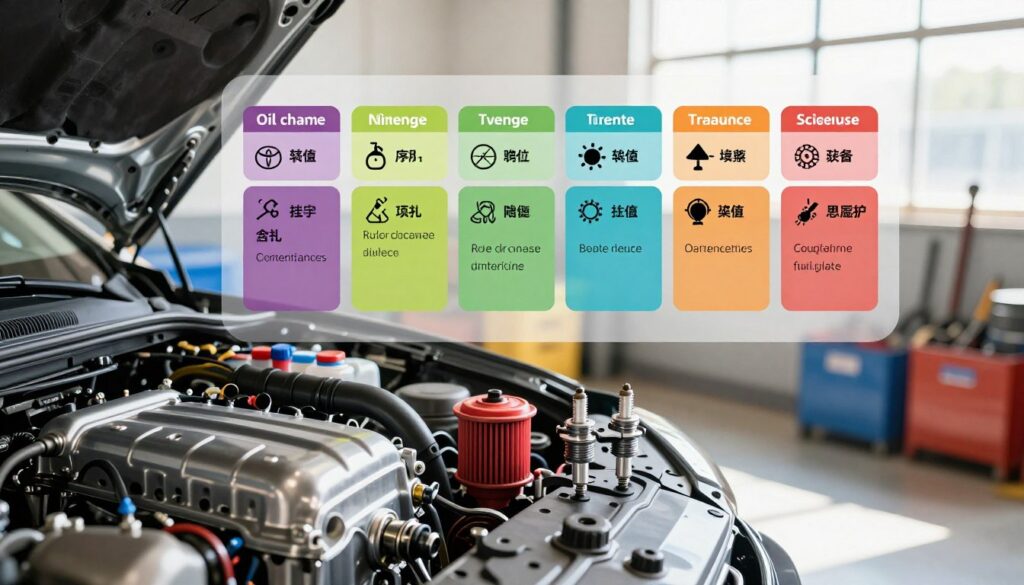
Oil Change Intervals for Toyota Vehicles
Clean oil is vital for my engine. It keeps parts moving smoothly and prevents damage. For synthetic oil, I change it every 5,000 to 15,000 miles. Regular oil changes are key to avoiding engine failure.
I always check my owner’s manual for my model’s needs. If I want to build my Toyota and customize it, I know high-performance driving needs more service. Being proactive keeps my engine running well.
Importance of Engine Air Filters
Replacing my engine air filter is like giving my car new lungs. A clean filter lets the engine breathe well, improving fuel economy and acceleration. A dirty filter makes the engine work too hard.
I check the air filter during major service visits. A dirty filter means the engine has to work harder. Clean air intake is key for my car’s smooth operation.
Monitoring Engine Performance Indicators
My dashboard tells me how my car is doing. I watch for warning lights, which signal problems early. Early detection saves money on repairs.
If my engine sounds different or loses power, I check it right away. Understanding these signs helps fix small problems before they get big. Consistent monitoring keeps my Toyota running great for years.
Fluid Checks: The Lifeblood of Your Toyota
I see the fluids in my Toyota as the lifeblood of the machine. They are key to avoiding overheating and mechanical problems. By sticking to a Toyota maintenance checklist, I can keep an eye on these levels. This ensures my car stays safe and runs well.
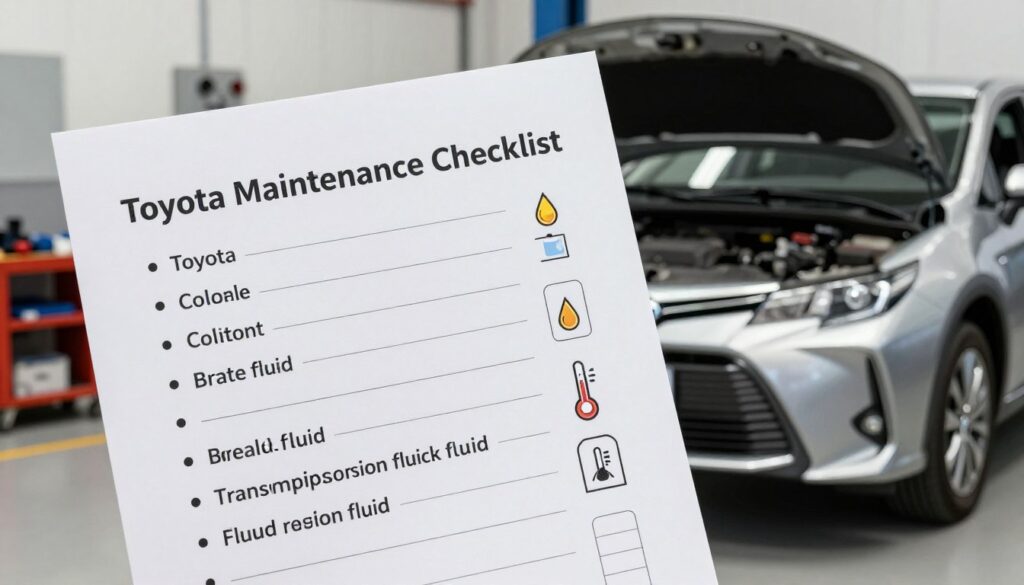
Importance of Coolant and Brake Fluid
Coolant, or anti-freeze, keeps my engine at the right temperature. It stops the engine block from cracking in cold weather. I check the coolant reservoir often to prevent overheating.
Brake fluid is also critical for my safety. It helps transfer the force from my pedal to the brakes. If the brake fluid level goes down, it might mean worn brake pads or a leak.
I always update my Toyota maintenance checklist to keep my brakes working well. This ensures I can stop safely and reliably.
Transmission Fluid Maintenance
The transmission fluid lubricates and cools the gears in my transmission. When it’s clean and at the right level, my Toyota shifts gears smoothly. If I ignore this fluid, my car might have harsh shifts or even a broken transmission.
I check the transmission dipstick often to see if the fluid is dark or burnt. Keeping the right amount of fluid is important. It helps protect the gears from too much friction.
Regular Checks for Power Steering Fluid
Power steering fluid makes it easy to steer my car. If steering feels hard or I hear a whining noise, it’s a sign the fluid is low. I check this reservoir to avoid damaging the power steering pump.
- Radiator Coolant: Prevents engine overheating.
- Brake Fluid: Ensures responsive stopping power.
- Transmission Fluid: Promotes smooth gear transitions.
- Power Steering Fluid: Maintains effortless handling.
By following this Toyota maintenance checklist, I can spot problems early. This saves me from expensive repairs. Just a few minutes under the hood keeps my Toyota running great for a long time.
Importance of Tire Care and Maintenance
I’ve learned that keeping tires in good shape is key to my Toyota maintenance checklist. Tires are the only part of my car that touches the road. Their condition affects my safety, fuel use, and how well my car handles. If I ignore them, my car might not drive smoothly.
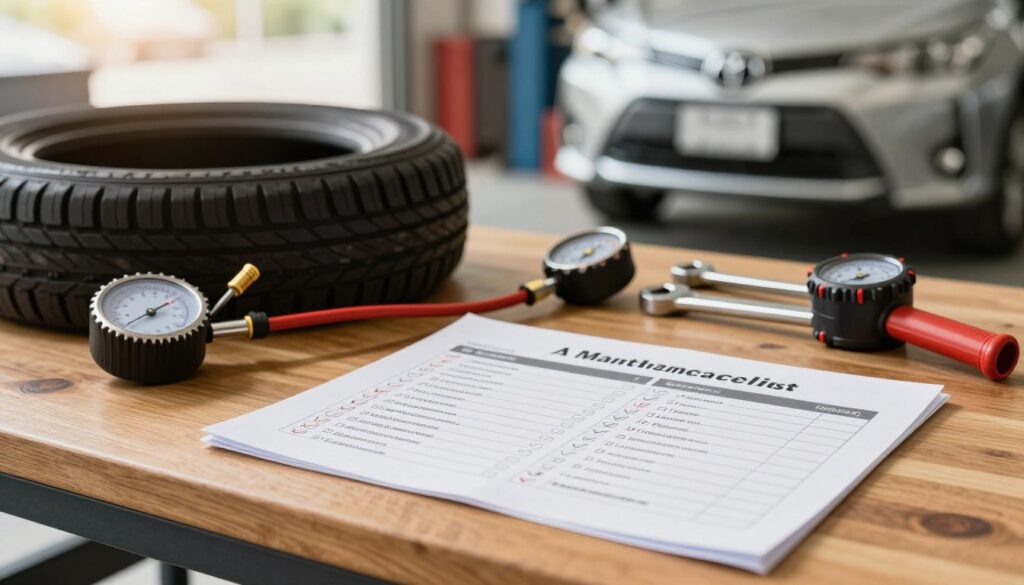
Recommended Tire Rotation Schedule
To keep my tires even, I rotate them every 5,000 to 8,000 miles. This simple step helps my tires last longer. It also makes sure my Toyota drives well in different conditions.
Checking Tire Pressure and Tread Depth
Keeping the right tire pressure is important for safety and saving gas. I check the pressure against the recommended levels on my driver’s side door jamb. I also use the “penny test” to check tread depth. If Lincoln’s head is hidden, it’s time for new tires.
“Proper tire maintenance is not just about longevity; it is about ensuring that every journey is as safe and efficient as possible for the driver and passengers.”
Selecting the Right Tires for Your Toyota
When it’s time for new tires, I choose ones that fit my Toyota’s needs. The right tires are key for safety and performance. For more tips, I check out Toyota tire care. By following my Toyota maintenance checklist, I keep my car running smoothly and reliably.
Brake Maintenance: Ensuring Safety on the Road
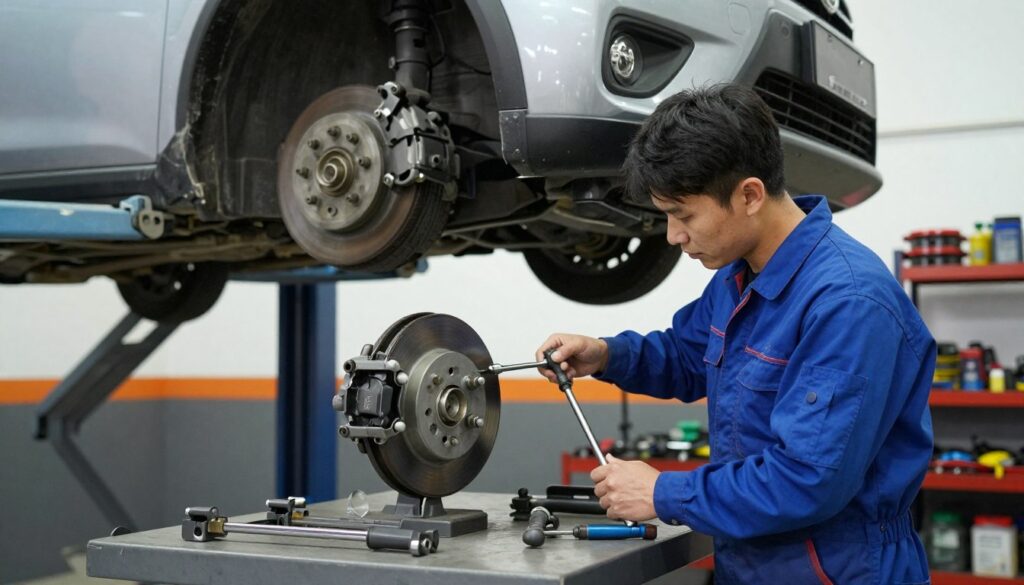
Keeping my Toyota’s brakes in top shape is key to staying safe on the road. It helps me avoid accidents and saves my rotors from damage. By following the best Toyota maintenance tips, my car stays in great condition for years.
“Safety is not just a feature; it is a commitment to the maintenance of the systems that protect us every single day.”
Signs Your Brakes Need Attention
I listen to my car every day. If I hear squeaking or a harsh grinding noise, my brake pads are worn. Ignoring these signs can damage my rotors, which are expensive to fix.
I also check the brake pedal’s feel. If it feels spongy or sinks too far, it’s time for a check-up. A well-maintained Toyota always performs consistently.
Routine Brake Fluid Checks
Brake fluid is essential for stopping. It can absorb moisture, which lowers its boiling point. I check the fluid levels and color regularly.
Clear or light-colored fluid is good. But dark or murky fluid means it’s time for a flush. Fresh brake fluid ensures my car stops quickly in emergencies. This simple step keeps my brakes reliable.
Choosing the Right Brake Pads
When replacing my pads, I choose quality parts made for my Toyota. Genuine components fit perfectly and work well. Cheap parts might save money but compromise safety and longevity.
I check my owner’s manual or ask a trusted technician for advice. The right pads make a big difference, whether I drive in the city or on the highway. Investing in quality parts means I can drive with confidence.
Battery Maintenance for Optimal Performance
To make sure my Toyota starts right, I focus on battery care. Following the best Toyota maintenance tips keeps me from facing a dead battery. A few minutes of effort keeps my car’s electrical system in top shape.

Tips for Extending Battery Life
Keeping my battery terminals clean is key. If I see corrosion or a white build-up, I use a battery cleaning brush to clean it. This keeps the electrical connection strong, which is essential for my battery’s life.
For electric models, I check out special care tips to keep my hybrid battery in good shape. Regular driving helps prevent damage to the battery.
Recognizing Battery Warning Signs
I watch for signs my battery might be failing. A slow engine crank when starting is a big clue. I also check for swelling or corrosion on the battery and terminals.
- Dimming headlights or interior lights.
- Dashboard warning lights related to the charging system.
- An older battery age, typically exceeding three to five years.
Proper Jump-Starting Techniques
When my battery dies, I jump-start it safely. First, I make sure the other car is off. Then, I connect the positive cable to the positive terminal, followed by the negative to a metal surface on the engine.
When the engine starts, I remove the cables in reverse order. These best Toyota maintenance tips help me stay safe and get moving fast. Here’s a quick guide to battery care.
| Symptom | Potential Cause | Recommended Action |
|---|---|---|
| Slow Engine Start | Low Charge | Test Voltage |
| Terminal Corrosion | Chemical Build-up | Clean with Brush |
| Swollen Case | Overheating | Replace Battery |
| Dim Headlights | Weak Battery | Check Alternator |
Interior and Exterior Care: Beyond Mechanics
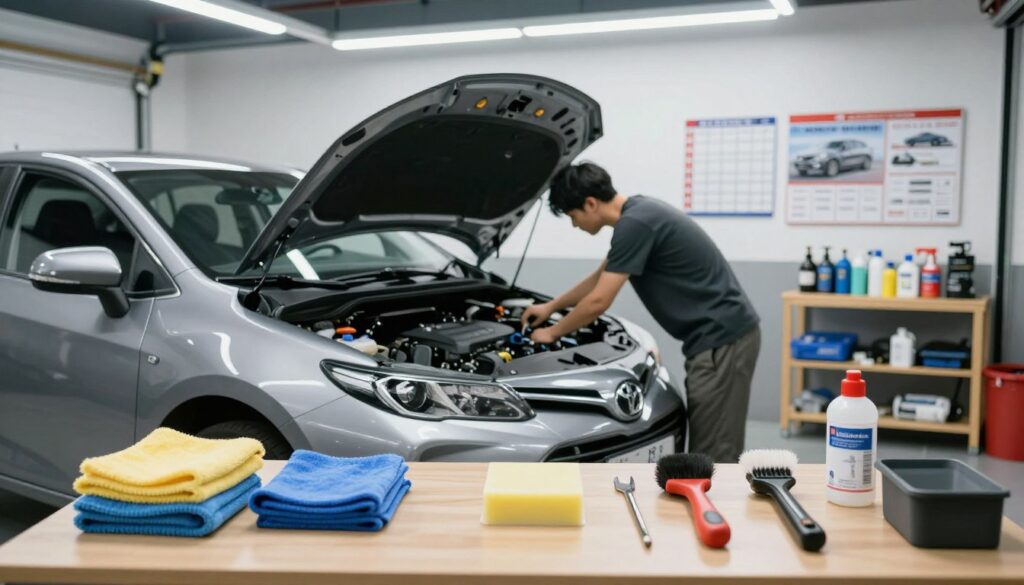
I think my car’s looks are just as important as how it runs. Keeping the outside and inside in top shape helps its value. Doing DIY Toyota maintenance myself makes me proud and prevents damage like rust and worn-out seats.
Routine Cleaning and Detailing
Keeping my car clean starts with regular washing. I remove dead bugs, bird droppings, and road chemicals to protect the wax and clear coat. Using the right soap is key to avoid damaging my Toyota’s finish.
Detailing is more than just washing. I use microfiber towels to avoid swirl marks and high-quality cleaners on the dashboard and door panels. This meticulous approach keeps the interior looking new and prevents dust and grime from damaging materials.
Protecting Your Toyota’s Paint and Interior
Applying wax or sealant is a key part of my DIY Toyota maintenance routine. It shields the paint from environmental harm and UV rays. Waxing every few months keeps the paint looking great and makes cleaning easier.
Inside, I use UV-protectant sprays on the dashboard to prevent damage. I also keep floor mats clean to protect the carpet from stains. These small steps keep my Toyota looking and feeling good for years.
Seasonal Maintenance Considerations
My car care changes with the seasons to fight off specific threats. In winter, I wash the undercarriage to remove salt and prevent rust. In summer, I use sunshades to protect the interior from heat and sunlight.
| Season | Primary Focus | Action Item |
|---|---|---|
| Spring | Deep Cleaning | Remove winter salt and grime |
| Summer | UV Protection | Apply wax and use sunshades |
| Autumn | Paint Prep | Seal paint before cold weather |
| Winter | Corrosion Control | Frequent undercarriage rinsing |
By being proactive with seasonal tasks, I avoid long-term damage. Regular DIY Toyota maintenance keeps my car looking and running great.
When to Seek Professional Help for Your Toyota
Keeping my car in top shape means knowing when to call in the experts. I look out for 7 signs your Toyota needs maintenance to avoid sudden breakdowns. I trust skilled technicians with the right tools to fix any issue.
Identifying Serious Problems Early
I pay close attention to my car’s performance to catch problems early. Fixing a small leak or odd noise can prevent big repairs. This way, I avoid costly engine or transmission work and keep maintenance costs down.
Finding a Trusted Mechanic
I look for reliable Toyota maintenance near me for my car’s care. Local dealerships offer certified staff who know my car’s specific needs. I trust them to use genuine parts, keeping my car in top condition.
The Benefits of Authorized Toyota Service Centers
Choosing an authorized service center adds value to my car’s history. It’s key when selling or trading in my vehicle. I’m confident that my car’s maintenance records are complete and meet Toyota’s standards.
FAQ
Where can I find the most accurate Toyota maintenance intervals for my specific model?
I always refer to my official Toyota maintenance manual, as it contains the precise intervals tailored to my vehicle’s engine and year. While general guides are helpful, the manual is the definitive source for maintaining my car’s performance.
How can I manage my Toyota maintenance cost effectively?
I find that the best way to manage costs is through preventative care. By following a Toyota maintenance checklist and performing basic DIY Toyota maintenance like changing air filters or checking fluids, I avoid the massive expenses associated with major mechanical failures.
What should I do if I need professional Toyota maintenance near me?
I recommend searching for authorized Toyota service centers or highly-rated independent mechanics who specialize in Japanese imports. Using a pro ensures that you get genuine parts and a service record that helps maintain your car’s resale value.
Is the 3,000-mile oil change rule for Toyota vehicles?
In my experience, most modern Toyotas using synthetic oil can go 5,000 to 10,000 miles between changes. I always verify this with my Toyota service schedule to ensure I am not wasting money or oil, while protecting my engine.
What are the most important DIY Toyota maintenance tasks I can do at home?
I regularly check my tire pressure, top off fluids, and inspect my battery for corrosion. These are simple tasks that significantly contribute to vehicle longevity and give me a better understanding of my car’s overall health.
How does a tire rotation schedule improve my Toyota’s performance?
Following a consistent rotation schedule ensures that my tires wear evenly. This extends the life of the tread, improves fuel efficiency, and provides better traction and safety, which are some of my best Toyota maintenance tips for any owner.

Hi! I’m Moheen Iftikhar, the founder of “CarZenithi.” I’m passionate about cars, modern automotive technology, and everything related to the driving experience. Through expert reviews, practical tips, and the latest industry insights, I aim to keep every car enthusiast informed, inspired, and connected to the world of automobiles.